
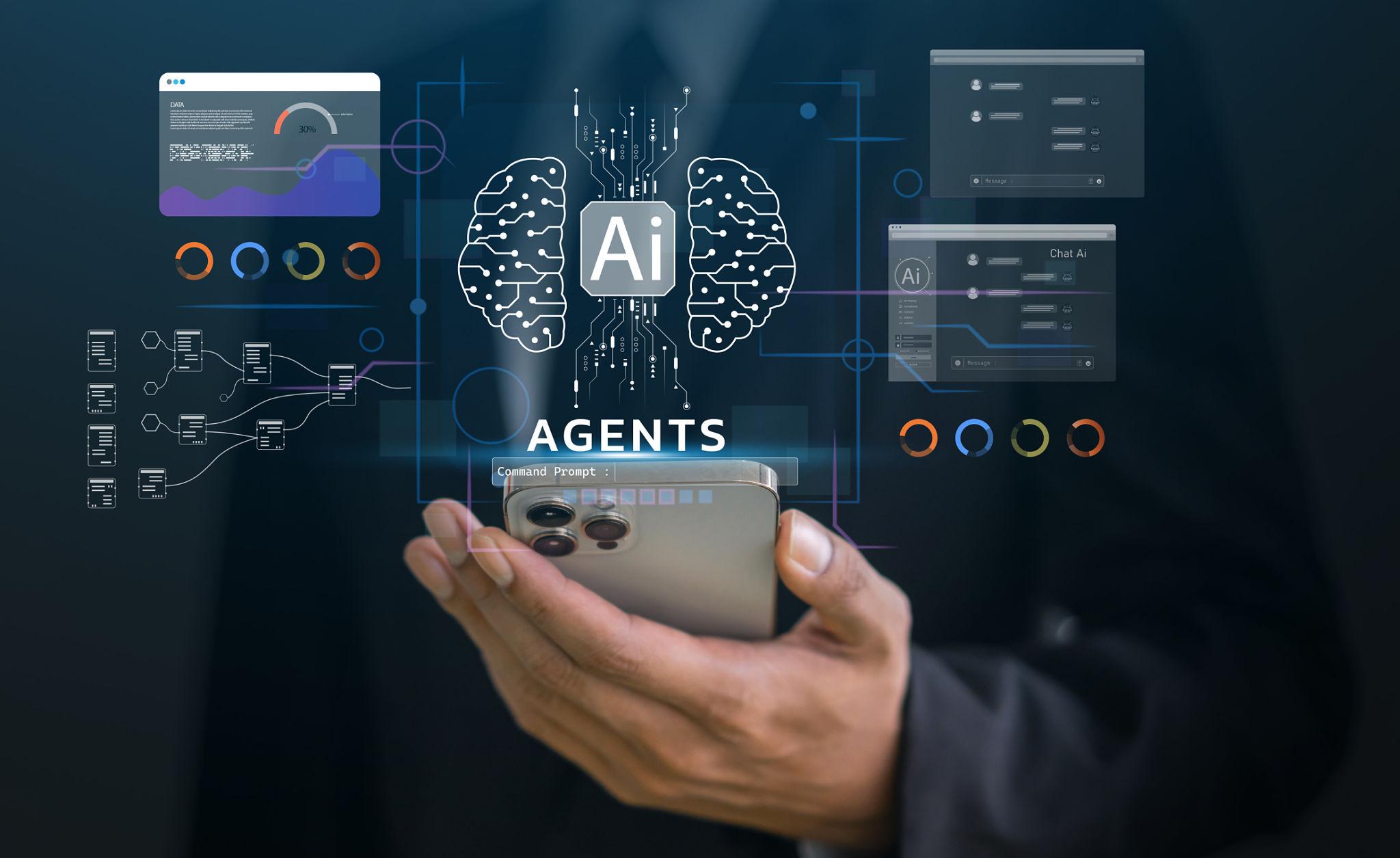
Agentic AI Workflows: From Copilots to Autonomous Colleagues
Artificial intelligence is rapidly transitioning from supportive tools to active participants in organisational workflows. What began as AI copilots—systems designed to assist users with suggestions and automation—has evolved into agentic AI workflows, where intelligent agents operate with a higher degree of autonomy. These systems are not just assisting humans; they are increasingly functioning as autonomous colleagues capable of executing tasks, making decisions, and collaborating across digital environments.
AI copilots have already demonstrated their value in enhancing productivity. They assist with writing, coding, data analysis, and customer interactions by providing contextual recommendations. However, copilots are inherently reactive—they depend on user prompts and guidance. Agentic AI workflows, in contrast, introduce proactive behaviour. Autonomous agents can initiate actions, manage tasks, and adapt to changing conditions without constant human intervention.
At the core of agentic workflows are intelligent agents designed with specific roles and capabilities. These agents can perceive inputs, analyse data, and execute actions based on predefined goals. In a multi-agent system, different agents collaborate to achieve complex objectives. For example, in an enterprise setting, one agent may monitor incoming data, another may perform analysis, and a third may trigger operational responses such as alerts or automated processes.
One of the key advantages of agentic AI workflows is efficiency. By automating multi-step processes, organisations can reduce manual effort and accelerate decision-making. These systems are particularly valuable in areas such as supply chain management, cybersecurity operations, financial analysis, and customer service. They enable real-time responses and continuous optimisation of workflows.
Another important benefit is scalability. Agentic systems can handle increasing workloads without proportional increases in human resources. This allows organisations to expand operations while maintaining efficiency and consistency. Additionally, these systems can operate continuously, providing 24/7 support and monitoring.
However, the transition from copilots to autonomous colleagues introduces new challenges. Governance and accountability become critical when AI systems make decisions independently. Organisations must establish clear boundaries, define responsibilities, and implement monitoring mechanisms to ensure that agents operate within acceptable limits. Transparency and explainability are essential to maintain trust in these systems.
Security is another important consideration. Autonomous agents often interact with multiple systems and data sources, increasing the potential attack surface. Robust security frameworks and access controls are necessary to protect sensitive information and ensure safe operations.
Organisations such as MIT Technology Review and the Institute of Electrical and Electronics Engineers have highlighted the growing importance of agentic AI in shaping the future of work.
In conclusion, agentic AI workflows represent a significant shift in how work is performed. By moving from reactive copilots to proactive, autonomous systems, organisations can unlock new levels of efficiency and innovation. While challenges remain, the integration of agentic AI into enterprise environments is set to redefine the relationship between humans and machines, transforming AI from a tool into a collaborative partner.
#AgenticAI #AIWorkflows #ArtificialIntelligence #Automation #TechTrends
#FutureOfWork #AIAgents #DigitalTransformation #AIInnovation
#MachineLearning #EnterpriseAI #SmartAutomation
Author
Dr. Akhilesh Kumar
References
- MIT Technology Review. Insights on Agentic AI and Future Workflows.
- Institute of Electrical and Electronics Engineers. Research on Autonomous Systems and AI Agents.
- Association for the Advancement of Artificial Intelligence. Studies on Multi-Agent Systems and AI Collaboration.