
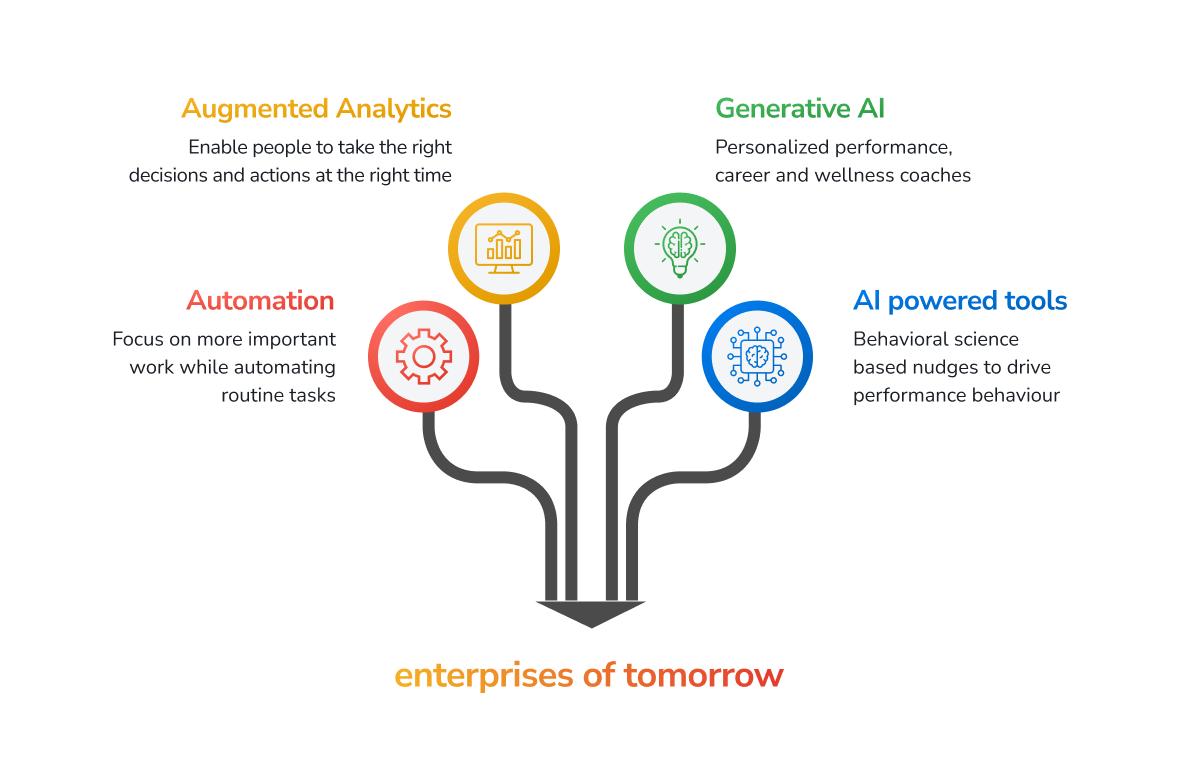
Beyond Generative AI: How Composite Intelligence Is Rewiring the Enterprise
For the past few years, Generative AI has dominated technology conversations, transforming content creation, software development, customer engagement, and knowledge management. While its impact has been remarkable, enterprises are beginning to realise that sustainable business transformation requires more than powerful language models. The next phase of intelligent systems is emerging through Composite Intelligence—an approach that combines multiple forms of artificial intelligence, human expertise, automation, and data-driven decision-making into a unified enterprise ecosystem.
Generative AI excels at creating text, code, images, and insights from vast amounts of information. However, business operations often require more than content generation. Organisations must make strategic decisions, manage risk, optimise processes, enforce compliance, and coordinate complex workflows. Composite intelligence addresses these challenges by integrating diverse intelligence capabilities into a collaborative framework.
Rather than relying on a single AI model, composite intelligence combines technologies such as machine learning, predictive analytics, knowledge graphs, optimisation engines, robotic process automation, agentic AI, and human-in-the-loop decision systems. Each component contributes a unique capability, creating a more robust and adaptable intelligence architecture.
For example, a financial institution evaluating a loan application may use machine learning to assess risk, generative AI to summarise customer information, predictive analytics to forecast repayment behaviour, and rule-based systems to ensure regulatory compliance. Together, these technologies create a decision-making process that is more accurate, transparent, and efficient than any individual system operating alone.
One of the key advantages of composite intelligence is enterprise-wide integration. Traditional AI deployments often remain confined to specific departments or use cases. Composite intelligence connects data, workflows, and decision-making processes across organisational boundaries, creating a unified intelligence layer that supports strategic objectives.
Organisations such as IBM and Microsoft are actively developing platforms that combine AI, automation, analytics, and governance into integrated enterprise intelligence ecosystems. These initiatives reflect a growing recognition that business value emerges when different forms of intelligence work together rather than independently.
Another significant benefit is explainability. Enterprises increasingly require AI systems that can justify recommendations and decisions. Composite intelligence enables organizations to combine predictive capabilities with rule-based reasoning and domain expertise, improving transparency and trust.
The rise of agentic AI further accelerates this trend. Autonomous agents can coordinate multiple systems, execute workflows, and collaborate with humans to achieve business outcomes. In this environment, intelligence becomes distributed across people, processes, and technologies rather than residing within a single AI model.
However, implementing composite intelligence also presents challenges. Integration complexity, data quality, governance, and interoperability must be carefully managed. Organizations need robust frameworks to ensure that diverse technologies work together effectively while maintaining security and compliance.
Another critical consideration is workforce readiness. Employees must develop new skills to collaborate with intelligent systems, interpret AI-generated insights, and oversee automated decision processes.
In conclusion, the future of enterprise intelligence extends beyond generative AI. Composite intelligence represents a more comprehensive approach that combines multiple technologies, human expertise, and autonomous systems into a unified decision-making ecosystem. As organizations seek greater agility, resilience, and innovation, composite intelligence is poised to become the foundation of the next generation of enterprise transformation.
#CompositeIntelligence #GenerativeAI #ArtificialIntelligence #EnterpriseAI
#DigitalTransformation #BusinessAutomation #DecisionIntelligence
#AgenticAI #MachineLearning #FutureOfWork #TechInnovation
#EnterpriseTransformation
Author
Dr. Akhilesh Kumar
References
- IBM. Research on Hybrid AI, Business Automation, and Enterprise Intelligence Platforms.
- Microsoft. Studies on AI, Analytics, and Intelligent Business Process Automation.
- Gartner. Composite AI and Intelligent Enterprise Frameworks.
- Institute of Electrical and Electronics Engineers. Research on Multi-Model AI Systems and Decision Intelligence.