
Humanoid Robots Are Here: From Factory Floors to Frontline Healthcare
For decades, humanoid robots existed primarily in science fiction, research laboratories, and technology demonstrations. Today, that reality is changing rapidly. Advances in artificial intelligence, robotics, computer vision, sensors, and battery technology have accelerated the development of humanoid robots capable of performing meaningful tasks in real-world environments. What was once considered futuristic is now becoming an emerging workforce reality, with humanoid robots moving from factory floors into hospitals, warehouses, retail environments, and public service roles.
Unlike traditional industrial robots that operate within fixed environments and perform repetitive tasks, humanoid robots are designed to navigate spaces built for humans. Their human-like structure allows them to walk, manipulate objects, use tools, and interact naturally with people. This adaptability makes them particularly valuable in environments where redesigning infrastructure for automation would be costly or impractical.
Manufacturing remains one of the most promising deployment areas. Factories face increasing pressure to improve productivity while addressing labor shortages and operational efficiency challenges. Humanoid robots can assist with material handling, assembly operations, quality inspections, and repetitive tasks that may pose ergonomic risks to workers. By working alongside human employees, these robots help create more flexible and resilient production environments.
Organizations such as Tesla and Boston Dynamics are actively advancing humanoid robotics technologies, demonstrating capabilities that continue to improve in mobility, dexterity, and autonomous decision-making.
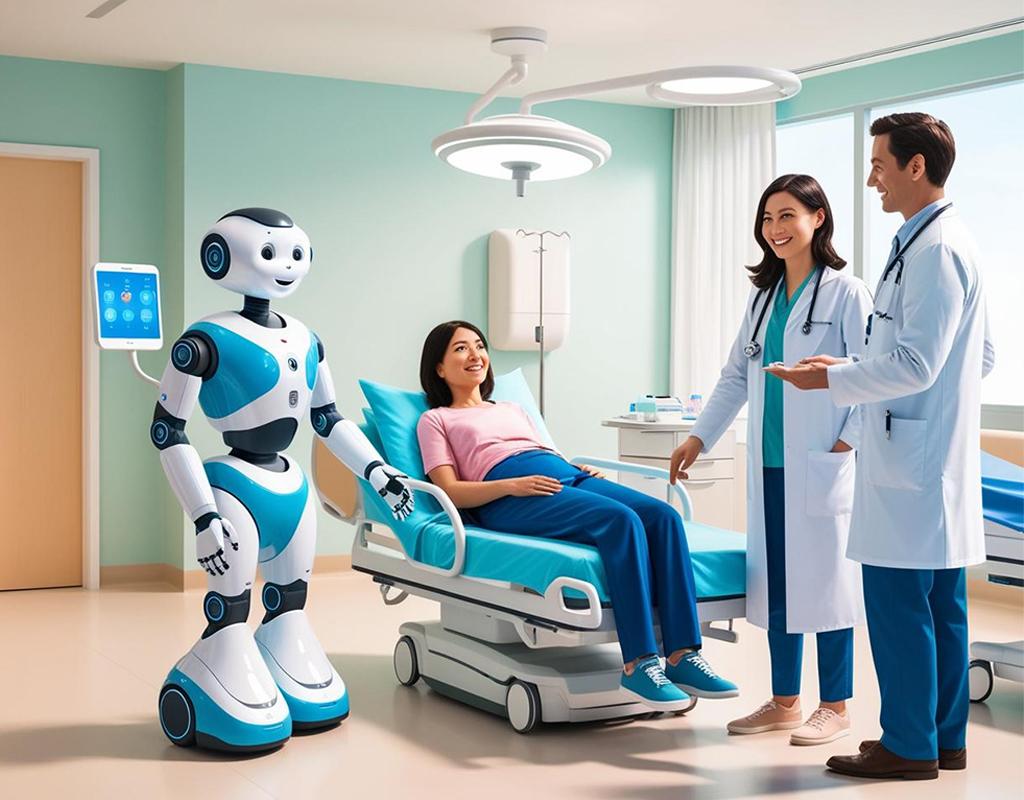
Healthcare represents another transformative application area. Hospitals worldwide face growing workforce shortages, increasing patient volumes, and rising operational demands. Humanoid robots can support healthcare professionals by transporting supplies, delivering medications, assisting with patient monitoring, and performing administrative tasks. In some cases, robots can provide companionship and support for elderly individuals, improving quality of life and reducing caregiver burden.
Artificial intelligence is the driving force behind these advancements. Modern humanoid robots combine computer vision, machine learning, natural language processing, and sensor fusion technologies to understand their environments and interact intelligently. These systems can recognise objects, interpret human commands, navigate complex spaces, and adapt to changing conditions in real time.
One of the most significant benefits of humanoid robotics is workforce augmentation rather than workforce replacement. Many organizations view robots as tools that enhance human productivity rather than eliminate jobs. By handling repetitive, hazardous, or physically demanding tasks, robots allow employees to focus on higher-value activities requiring creativity, empathy, and critical thinking.
However, widespread adoption also introduces challenges. Safety remains a top priority, particularly in environments where robots and humans work closely together. Developers must ensure reliable perception systems, robust decision-making capabilities, and fail-safe mechanisms to prevent accidents.
Economic considerations are equally important. Although hardware costs continue to decline, deploying humanoid robots at scale requires substantial investment in infrastructure, maintenance, and workforce training. Organizations must carefully evaluate return on investment before large-scale implementation.
Ethical concerns also deserve attention. Privacy, accountability, employment impacts, and human-robot interaction standards will shape public acceptance and regulatory frameworks. Responsible innovation is essential to ensure that robotic technologies benefit society while minimising unintended consequences.
Researchers at institutions such as Massachusetts Institute of Technology continue to advance robotics, autonomous systems, and human-machine collaboration models that will influence the next generation of intelligent machines.
In conclusion, humanoid robots are no longer confined to futuristic concepts. They are steadily becoming practical tools capable of supporting industries, healthcare systems, and public services. As artificial intelligence and robotics technologies continue to mature, humanoid robots will play an increasingly important role in augmenting human capabilities, improving operational efficiency, and addressing workforce challenges. The future of work may not be human versus machine, but humans and machines working together more effectively than ever before.
#HumanoidRobots #Robotics #ArtificialIntelligence #Industry50 #HealthcareTechnology #FutureOfWork #Automation #FutureTech
#HumanRobotCollaboration #DigitalTransformation #SmartManufacturing
#InnovationTechnology
Author
Dr. Akhilesh Kumar
References
- Tesla. Research and Development of Humanoid Robotics and Autonomous Systems.
- Boston Dynamics. Advanced Mobility and Robotics Engineering Studies.
- Massachusetts Institute of Technology. Research on Robotics, AI, and Human-Robot Collaboration.
- Institute of Electrical and Electronics Engineers. Research on Intelligent Robotics and Autonomous Systems.