
Hybrid Quantum-Classical Architectures: Bridging the Gap to Commercial Value
Quantum computing is often portrayed as a revolutionary technology capable of solving problems beyond the reach of traditional computers. While this vision remains compelling, the reality is that fully fault-tolerant quantum computers are still under development. In the meantime, organizations are increasingly focusing on a more practical approach: Hybrid Quantum-Classical Architectures. These architectures combine the strengths of classical computing and quantum processing to create commercially viable solutions that can deliver value today while preparing for the future.
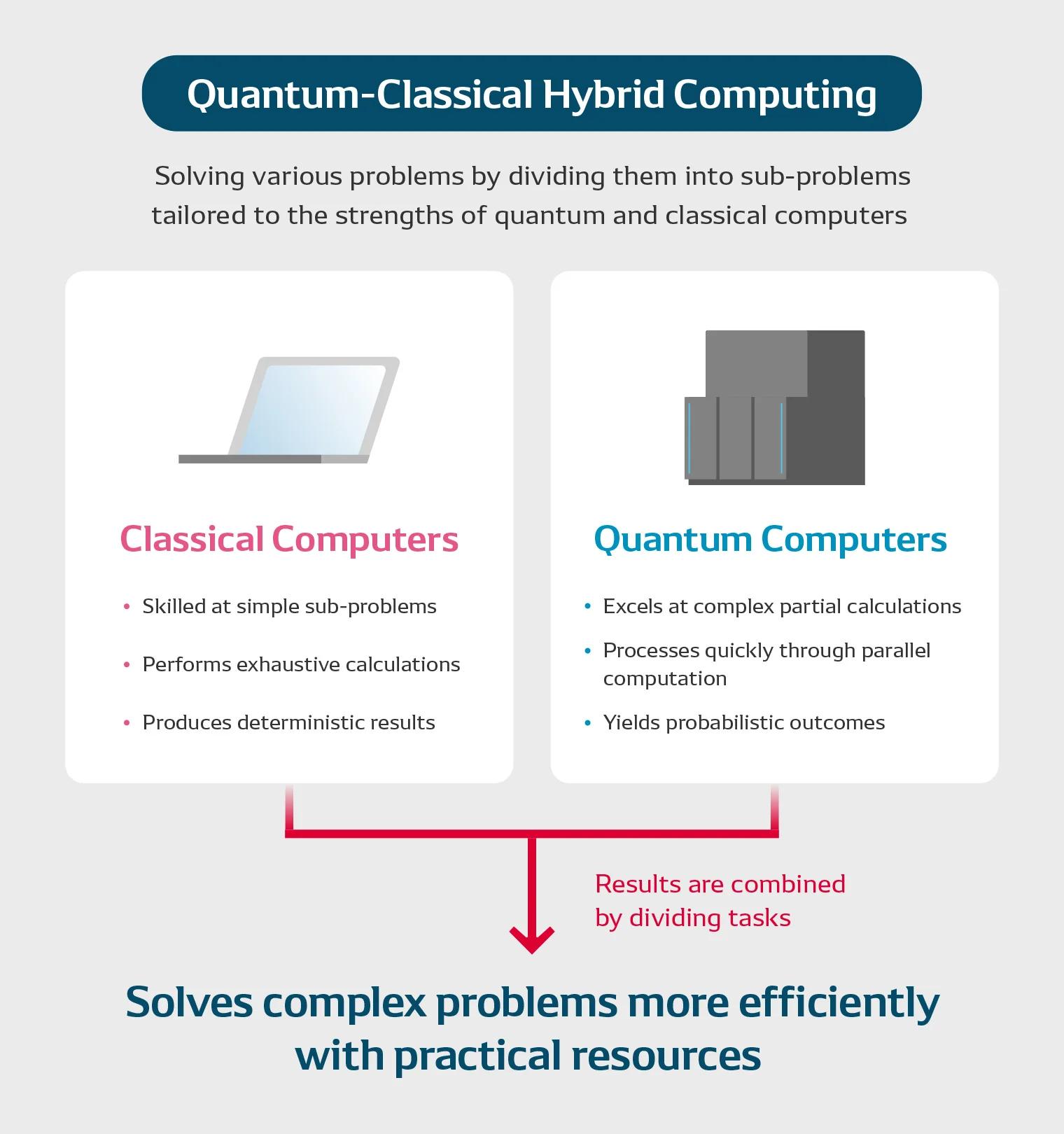
Rather than viewing quantum and classical systems as competitors, hybrid architectures treat them as complementary technologies. Classical computers remain highly efficient at handling general-purpose computing tasks, data management, user interfaces, and business applications. Quantum processors, on the other hand, excel at solving specific classes of complex problems involving optimisation, simulation, and probabilistic computation. By integrating both environments, organizations can leverage the best of each world.
In a hybrid model, classical systems typically manage data preparation, workflow orchestration, and result interpretation. Computationally intensive components that may benefit from quantum acceleration are delegated to quantum processors. Once calculations are completed, the results are returned to classical systems for further analysis and decision-making. This collaborative approach creates a practical pathway toward commercial adoption without requiring a complete technological overhaul.
One of the most promising applications of hybrid architectures is optimisation. Industries such as logistics, manufacturing, finance, and energy management frequently encounter problems involving vast numbers of variables and constraints. Hybrid systems can combine classical optimisation techniques with quantum algorithms to explore solution spaces more efficiently and potentially achieve better outcomes.
Another important area is scientific research. Pharmaceutical companies are investigating hybrid quantum-classical approaches to accelerate molecular modeling and drug discovery. Similarly, materials science researchers are using these architectures to simulate complex chemical interactions that are difficult for traditional systems to model accurately.
Technology leaders such as IBM and Microsoft are actively developing platforms that enable organizations to experiment with hybrid quantum workflows through cloud-based services and integrated development environments. These platforms are helping bridge the gap between research and real-world implementation.
The commercial value of hybrid architectures lies in risk reduction. Organizations can begin building quantum expertise, testing use cases, and developing new capabilities without waiting for fully mature quantum hardware. This allows businesses to gain experience and identify opportunities while minimising investment uncertainty.
Cybersecurity is another area where hybrid strategies are becoming important. As quantum capabilities evolve, organizations are evaluating both quantum-resistant cryptography and quantum-enhanced security techniques. Hybrid architectures provide a controlled environment for exploring these emerging technologies.
However, challenges remain. Quantum hardware limitations, algorithm development complexity, and integration requirements continue to present obstacles. Additionally, organizations need professionals who understand both classical and quantum computing paradigms, creating demand for specialised skills and training.
Despite these challenges, hybrid quantum-classical systems are increasingly viewed as the most realistic pathway to near-term quantum value. They enable organizations to move beyond theoretical discussions and begin applying quantum technologies to real business problems.
In conclusion, hybrid quantum-classical architectures represent a critical bridge between experimental quantum research and practical commercial outcomes. By combining the reliability of classical computing with the unique capabilities of quantum processors, organizations can unlock new opportunities for innovation, optimisation, and competitive advantage. As quantum technologies mature, these hybrid systems will likely become the foundation upon which the next generation of enterprise computing is built.
#QuantumComputing #HybridComputing #QuantumTechnology
#EnterpriseInnovation #FutureTech #QuantumAlgorithms
#DigitalTransformation #CommercialQuantum #NextGenerationComputing
#QuantumResearch #TechnologyInnovation #QuantumClassicalArchitecture
Author
Dr. Akhilesh Kumar
References
- IBM. Hybrid Quantum Computing and Enterprise Quantum Platform Research.
- Microsoft. Quantum Development Ecosystems and Integrated Computing Frameworks.
- Institute of Electrical and Electronics Engineers. Research on Quantum-Classical Integration and Computational Architectures.
- National Institute of Standards and Technology. Quantum Computing Research and Technology Readiness Studies.