
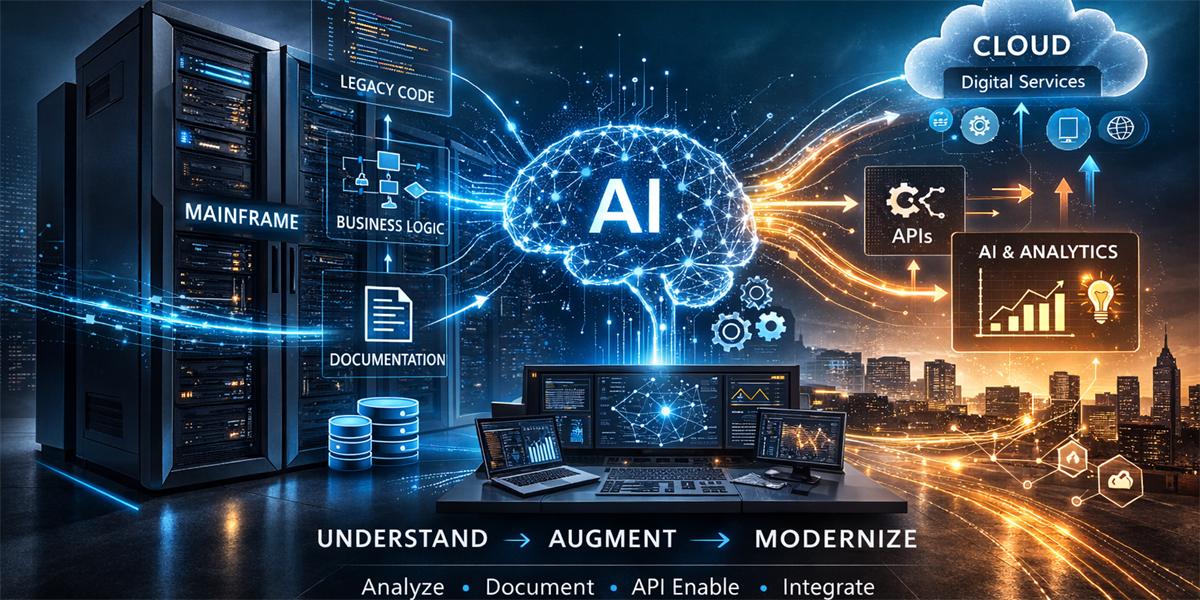
The AI-First Cloud: Modernizing Legacy Infrastructure for the Next Decade
The cloud revolution transformed how organizations build, deploy, and manage digital services. However, the next decade of innovation will be defined not simply by cloud adoption, but by the emergence of the AI-First Cloud, an infrastructure paradigm designed from the ground up to support artificial intelligence, autonomous systems, and intelligent business operations. As enterprises increasingly integrate AI into every aspect of their operations, legacy infrastructure is becoming a significant barrier to innovation, agility, and scalability.
Many organizations still operate on technology foundations built for a different era. Traditional data centers, monolithic applications, siloed databases, and manually managed systems were not designed to support modern AI workloads. Large language models, real-time analytics, autonomous agents, and advanced machine learning systems require highly scalable, data-centric, and intelligent cloud environments capable of processing enormous volumes of information efficiently.
The AI-first cloud goes beyond conventional cloud computing. It combines elastic infrastructure, AI acceleration hardware, intelligent automation, and data-centric architectures into a unified ecosystem. Rather than simply hosting applications, the cloud becomes an active participant in business operations, capable of optimising resources, automating workflows, predicting failures, and enabling real-time decision-making.
One of the defining characteristics of AI-first infrastructure is intelligent resource management. Traditional cloud environments often depend on predefined configurations and manual optimisation. AI-driven cloud platforms continuously monitor workloads, analyse usage patterns, and automatically adjust resources to improve performance and cost efficiency. This creates a more adaptive and resilient operating environment.
Organizations such as Microsoft, Google, and Amazon Web Services are investing heavily in AI-native cloud platforms that integrate machine learning, automation, and advanced computing infrastructure. These initiatives are helping enterprises accelerate digital transformation while supporting increasingly sophisticated AI applications.
Data modernisation is another critical component of the AI-first cloud. Legacy systems often store information in disconnected silos, making it difficult to generate actionable insights. Modern cloud architectures leverage data lakes, real-time analytics platforms, and intelligent data pipelines to create unified and accessible information ecosystems. This enables AI systems to operate more effectively and deliver greater business value.
Cybersecurity also evolves within AI-first environments. Intelligent security platforms can detect anomalies, identify emerging threats, and respond autonomously to incidents. By embedding AI into cloud security operations, organizations can improve resilience against increasingly sophisticated cyberattacks.
The rise of agentic AI further strengthens the case for modernisation. Autonomous agents require scalable infrastructure, real-time data access, and seamless integration with enterprise systems. Legacy environments often struggle to support these requirements, making cloud transformation an essential step toward future readiness.
However, modernisation is not without challenges. Migrating legacy applications, managing data governance, ensuring regulatory compliance, and controlling transformation costs require careful planning. Organizations must balance innovation with operational continuity while maintaining security and reliability throughout the transition process.
Workforce readiness is equally important. Technology teams need expertise in cloud-native development, AI operations, automation, and cybersecurity to fully leverage AI-first platforms. Continuous learning and skills development will be critical to successful adoption.
In conclusion, the AI-first cloud represents the next evolution of enterprise infrastructure. It transforms the cloud from a passive hosting environment into an intelligent, adaptive, and autonomous digital foundation. Organizations that modernise their legacy systems today will be better positioned to leverage artificial intelligence, accelerate innovation, and remain competitive in the intelligent economy of the next decade. The future of enterprise technology is not merely cloud-based—it is AI-powered from the core.
#AIFirstCloud #CloudComputing #ArtificialIntelligence #FutureTech
#DigitalTransformation #CloudModernization #EnterpriseTechnology
#AIOps #CloudNative #IntelligentInfrastructure #TechnologyInnovation
#DigitalFuture
Author
Dr. Akhilesh Kumar
References
- Microsoft. AI-Native Cloud Infrastructure and Intelligent Enterprise Platforms.
- Google. Research on Cloud AI, Data Platforms, and Scalable Computing.
- Amazon Web Services. AI, Cloud Modernization, and Intelligent Infrastructure Solutions.
- Cloud Native Computing Foundation. Cloud-Native Architecture and Enterprise Modernization Frameworks.