Vibe Coding Goes Professional: The End of Syntax Debugging?
Software development is undergoing a quiet but powerful shift. What began as “vibe coding”—a creative, flow-driven approach to writing code—is evolving into a professional workflow supported by intelligent tools. With the rise of AI-assisted development environments, the traditional burden of syntax debugging is gradually diminishing, allowing developers to focus more on logic, design, and problem-solving.
Historically, coding required meticulous attention to syntax. A misplaced semicolon or incorrect indentation could halt progress and consume valuable time. Developers often spend hours debugging small errors that have little to do with the core functionality of their applications. Today, intelligent coding assistants are changing this dynamic by identifying and correcting such issues in real time.
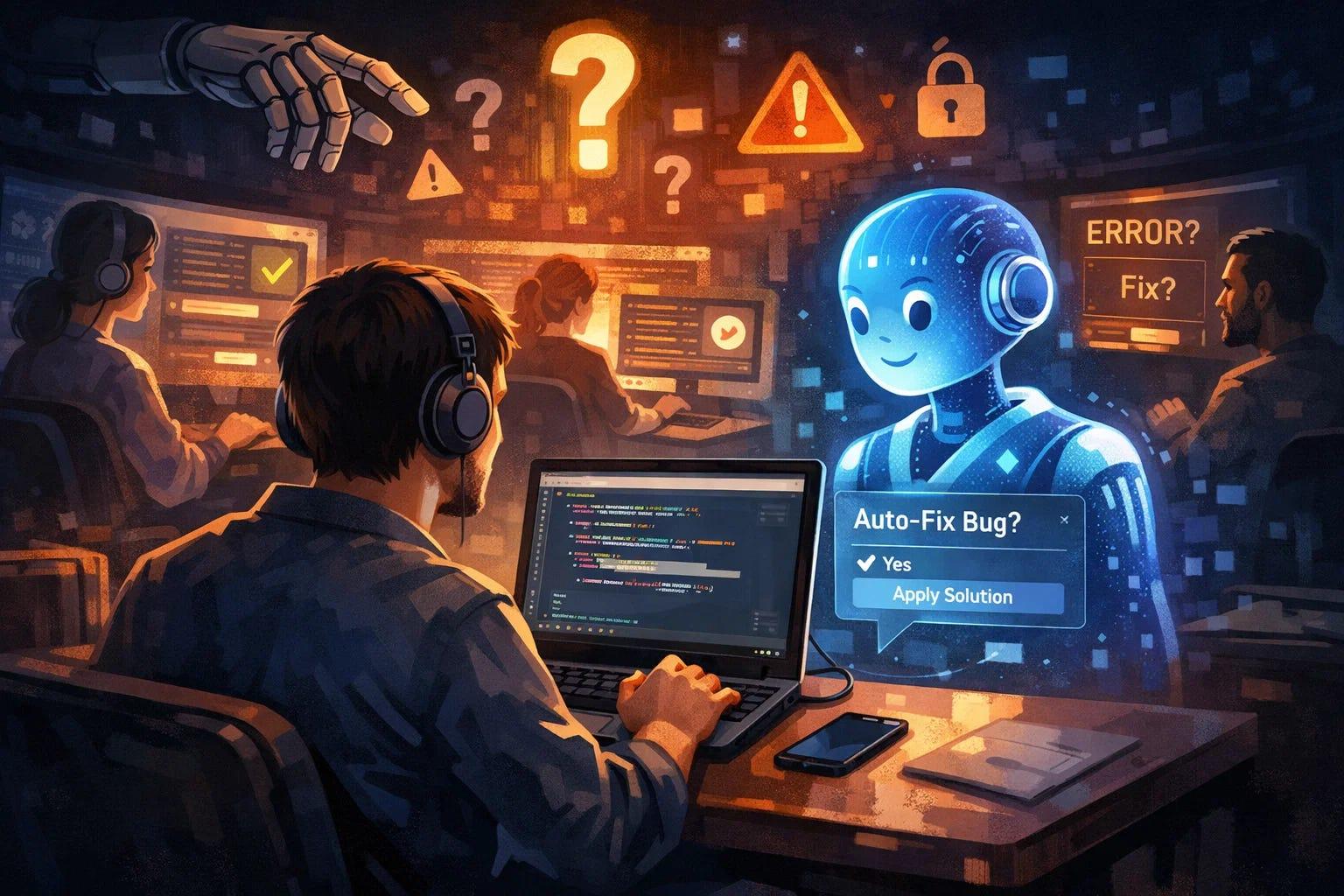
Modern development tools integrate machine learning models capable of understanding programming patterns and predicting developer intent. These systems can suggest code completions, highlight errors instantly, and even refactor entire blocks of code. As a result, syntax errors are increasingly handled automatically, reducing friction in the development process.
This transformation aligns closely with the concept of vibe coding. When developers enter a state of deep focus, uninterrupted by minor technical obstacles, they can think more creatively and build more efficiently. AI-driven tools support this state by acting as silent collaborators, managing repetitive tasks and enabling a smoother coding experience.
However, the idea that syntax debugging will completely disappear is an oversimplification. While AI can handle many routine errors, understanding the underlying logic and architecture of a system remains essential. Complex bugs, performance issues, and security vulnerabilities still require human expertise and critical thinking. Developers must continue to understand the fundamentals of programming to ensure code quality and reliability.
Another important consideration is dependency on automation. Over-reliance on AI tools may reduce a developer’s ability to troubleshoot independently. Maintaining a balance between automation and skill development is crucial for long-term professional growth.
The professionalisation of vibe coding also raises questions about coding standards and collaboration. Teams must ensure that AI-generated code aligns with organisational guidelines and remains maintainable. Code reviews, testing, and documentation continue to play a vital role in ensuring quality.
Looking ahead, the future of software development will likely be defined by collaboration between human creativity and machine intelligence. Developers will spend less time on routine debugging and more time designing systems, solving complex problems, and innovating.
In conclusion, while syntax debugging may not disappear entirely, its significance is rapidly declining. Vibe coding, supported by intelligent tools, is reshaping how software is created—making development faster, more intuitive, and more aligned with human creativity.
#VibeCoding #AICoding #SoftwareDevelopment #AIinTech #Programming
#DevTools #Automation #FutureOfWork #CodeEfficiency #TechInnovation
#DeveloperLife #DigitalTransformation
Author
Dr. Akhilesh Kumar
References
- IEEE Computer Society. Research on AI-assisted software development.
- Association for Computing Machinery. Studies on programming productivity and automation.
- GitHub. Developer tools and AI-assisted coding insights.