
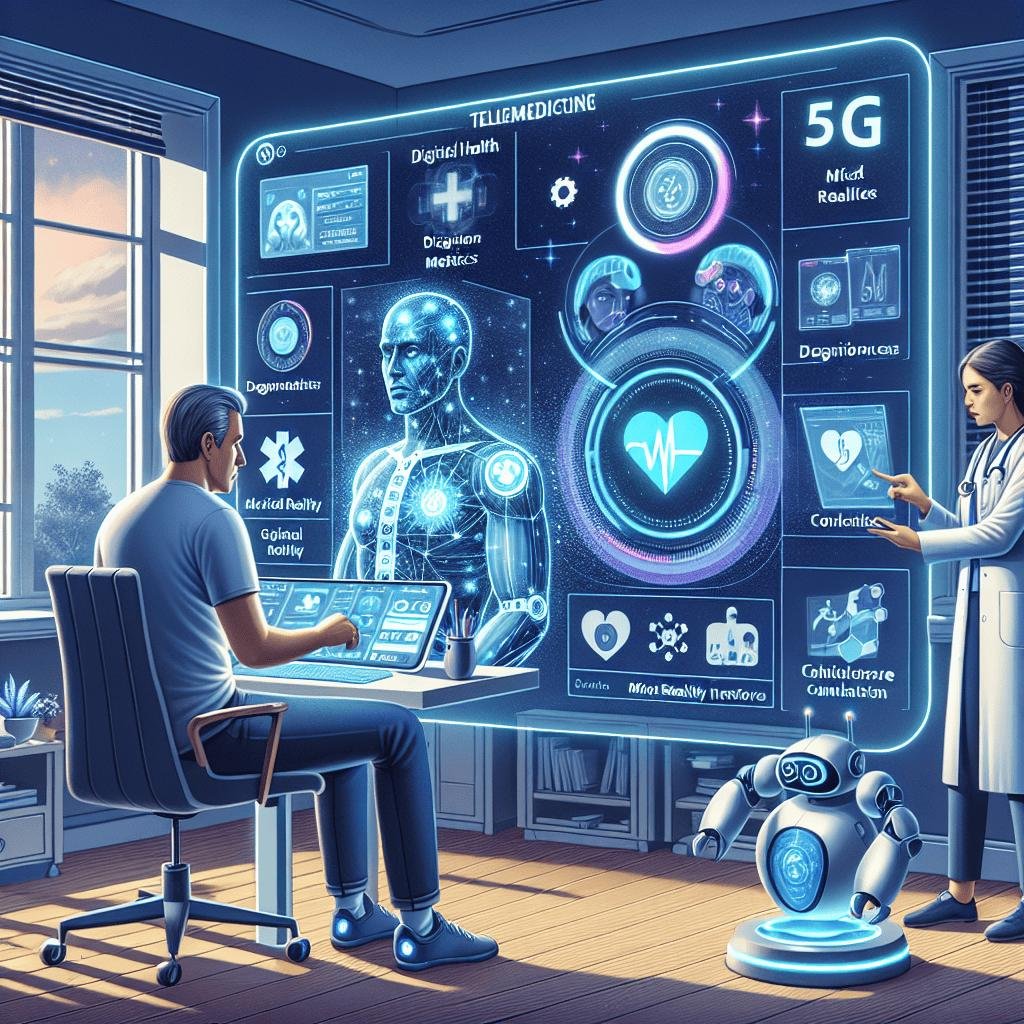
Healthcare Without Walls: The Future of AI-Driven Virtual Care Ecosystems
The future of healthcare is no longer confined to hospital buildings, outpatient clinics, or physician offices. Advances in Artificial Intelligence (AI), cloud computing, telemedicine, wearable technologies, and connected medical devices are reshaping healthcare into a continuous, patient-centred service that extends far beyond physical walls. This emerging model, often described as Healthcare Without Walls, represents a fundamental shift from episodic treatment to intelligent, proactive, and personalised care delivered anytime and anywhere.
The COVID-19 pandemic accelerated the adoption of virtual healthcare worldwide, demonstrating that many clinical services could be delivered safely and effectively through digital platforms. What began as a necessity has evolved into a strategic transformation. Today, healthcare organisations are moving beyond video consultations toward integrated virtual care ecosystems where AI continuously monitors patient health, predicts risks, supports clinical decisions, and coordinates care across multiple settings.
Unlike traditional healthcare models that rely heavily on scheduled appointments, AI-driven virtual care ecosystems operate continuously. Patients generate health information through wearable sensors, smart medical devices, mobile applications, and connected home monitoring systems. This real-time stream of physiological data, including heart rate, blood pressure, glucose levels, oxygen saturation, sleep quality, and physical activity, provides clinicians with a far more comprehensive understanding of an individual's health than occasional hospital visits ever could.
Artificial Intelligence serves as the intelligence engine behind these virtual ecosystems. Machine learning algorithms analyse enormous volumes of patient data to identify subtle physiological changes that may indicate disease progression, medication complications, or impending clinical deterioration. Instead of waiting for patients to report symptoms, AI systems can alert healthcare providers to emerging risks before serious complications occur, enabling earlier intervention and improving patient outcomes.
Remote Patient Monitoring (RPM) has become one of the most valuable applications of virtual healthcare. Patients living with chronic diseases such as diabetes, hypertension, heart failure, chronic obstructive pulmonary disease, and kidney disorders can remain safely at home while clinicians continuously monitor their condition through connected devices. Automated alerts allow care teams to intervene rapidly when abnormal measurements are detected, reducing unnecessary hospital admissions and emergency department visits.
Virtual care also strengthens healthcare accessibility. Rural communities, elderly populations, individuals with disabilities, and patients living in underserved regions often face significant barriers to obtaining timely medical care. AI-powered telemedicine platforms reduce geographic limitations by connecting patients with specialists regardless of physical location. Language translation, intelligent scheduling, automated documentation, and clinical decision support further improve both efficiency and patient experience.
Generative AI is transforming clinician productivity within virtual care environments. Intelligent systems can summarise clinical consultations, draft medical documentation, retrieve relevant clinical guidelines, generate patient education materials, and assist with care coordination. By reducing administrative workload, clinicians gain more time to focus on patient interaction and complex medical decision-making.
The rise of digital therapeutics further expands the virtual care ecosystem. Evidence-based software applications now support the management of chronic diseases, mental health conditions, rehabilitation programs, medication adherence, and lifestyle modification. AI personalises these interventions by continuously adapting recommendations according to patient behaviour, clinical progress, and treatment responses.
Technology companies including Microsoft, Google, Apple, Amazon, and Philips are investing heavily in cloud healthcare platforms, wearable technologies, AI-assisted diagnostics, and remote patient monitoring solutions. These innovations are enabling healthcare providers to deliver integrated care across hospitals, homes, pharmacies, rehabilitation centres, and community health services.
Despite these remarkable advances, virtual healthcare also presents important challenges. Protecting patient privacy, securing connected medical devices, ensuring interoperability between healthcare systems, addressing algorithmic bias, and maintaining regulatory compliance remain essential priorities. Cybersecurity has become particularly critical as healthcare increasingly depends upon cloud infrastructure and Internet-connected medical technologies.
Digital inclusion is another important consideration. Although virtual care expands healthcare access, disparities in internet connectivity, digital literacy, and technology availability may prevent some populations from fully benefiting from these innovations. Healthcare organizations must therefore design virtual care strategies that remain inclusive, equitable, and accessible for diverse patient communities.
The future of healthcare will also involve greater integration between AI, robotics, digital twins, genomics, and precision medicine. Virtual care ecosystems will evolve from reactive service delivery into predictive health platforms capable of identifying disease risks, recommending personalised interventions, and coordinating multidisciplinary care before serious illness develops. Hospitals will increasingly function as specialised centres for acute and complex treatments, while routine healthcare will be delivered through intelligent digital networks extending directly into patients' homes.
Human expertise will remain central to this transformation. Artificial intelligence can process vast amounts of clinical data and generate valuable insights, but empathy, ethical judgment, compassion, and shared decision-making continue to define quality healthcare. The most successful virtual care ecosystems will therefore combine advanced technology with human-centred clinical practice rather than replacing healthcare professionals.
In conclusion, Healthcare Without Walls represents one of the most significant transformations in modern medicine. AI-driven virtual care ecosystems are enabling continuous monitoring, proactive intervention, personalised treatment, and greater healthcare accessibility while improving efficiency across the entire continuum of care. As digital technologies continue to mature, healthcare will become increasingly connected, intelligent, and patient-centred. Organizations that embrace this evolution responsibly will help create a future where high-quality healthcare is available wherever patients live, not simply where hospitals are built.
#HealthcareWithoutWalls #VirtualCare #DigitalHealth #Telemedicine
#ArtificialIntelligence #AIHealthcare #RemotePatientMonitoring
#ConnectedCare #HealthcareInnovation #SmartHealthcare #HealthTech
#PrecisionMedicine #FutureOfHealthcare #PatientCenteredCare
#MedicalTechnology #DrAkhileshKumar
Author: Dr. Akhilesh Kumar
References
- World Health Organization. Global Strategy on Digital Health 2020–2025.
- National Institutes of Health. Research on Artificial Intelligence, Telemedicine, and Digital Health.
- Healthcare Information and Management Systems Society. Digital Health Transformation and Virtual Care Frameworks.
- Microsoft. Cloud for Healthcare and AI Innovation.
- Google. Healthcare AI Research and Digital Health Solutions.
- Apple. Health Technologies and Wearable Health Monitoring.
- Amazon. Cloud Infrastructure and Healthcare Innovation.
- Philips. Connected Care, Remote Patient Monitoring, and Virtual Healthcare Technologies.
- Institute of Electrical and Electronics Engineers. Research on AI, Telemedicine, and Smart Healthcare Systems.
Comments (0)
No comments yet. Be the first to share your thoughts!
Leave a Comment