Neurotechnology and AI: Unlocking the Future of Personalized Brain Healthcare
The human brain is often described as the most sophisticated computing system ever created. Containing nearly 86 billion interconnected neurons that communicate through trillions of synaptic connections, it remains one of science's greatest mysteries. Today, however, remarkable advances in Artificial Intelligence (AI), neurotechnology, and next-generation semiconductor computing are bringing researchers closer to understanding and ultimately enhancing the brain in ways that were once considered science fiction. Together, these technologies are laying the foundation for a new era of personalised brain healthcare, where neurological diseases can be detected earlier, treated more precisely, and continuously monitored through intelligent digital systems.
The convergence of neuroscience and computing represents one of the most exciting frontiers in modern medicine. Traditional neurology has relied on clinical observations, imaging studies, and standardised treatment protocols to diagnose and manage neurological disorders. While these approaches have significantly improved patient care, they often struggle to account for the complexity and individuality of the human brain. AI is changing this landscape by enabling the analysis of vast neurological datasets at unprecedented speed and precision, making highly personalised care increasingly achievable.
Modern neurotechnology encompasses a broad ecosystem of innovations, including brain-computer interfaces (BCIs), advanced neuroimaging, wearable neural sensors, implantable neurostimulators, digital biomarkers, and AI-powered diagnostic platforms. These technologies continuously collect neural and physiological data that reflect how the brain functions in real-world environments. Machine learning algorithms transform these data streams into clinically meaningful insights, helping physicians identify subtle neurological changes long before traditional diagnostic methods detect disease.
One of the most promising applications is the early diagnosis of neurodegenerative disorders such as Alzheimer's disease and Parkinson's disease. AI models can analyse magnetic resonance imaging (MRI), positron emission tomography (PET), electroencephalography (EEG), genetic information, and cognitive assessment data simultaneously, identifying complex patterns associated with early disease progression. Earlier diagnosis creates valuable opportunities for timely intervention, personalised therapies, and improved long-term patient outcomes.
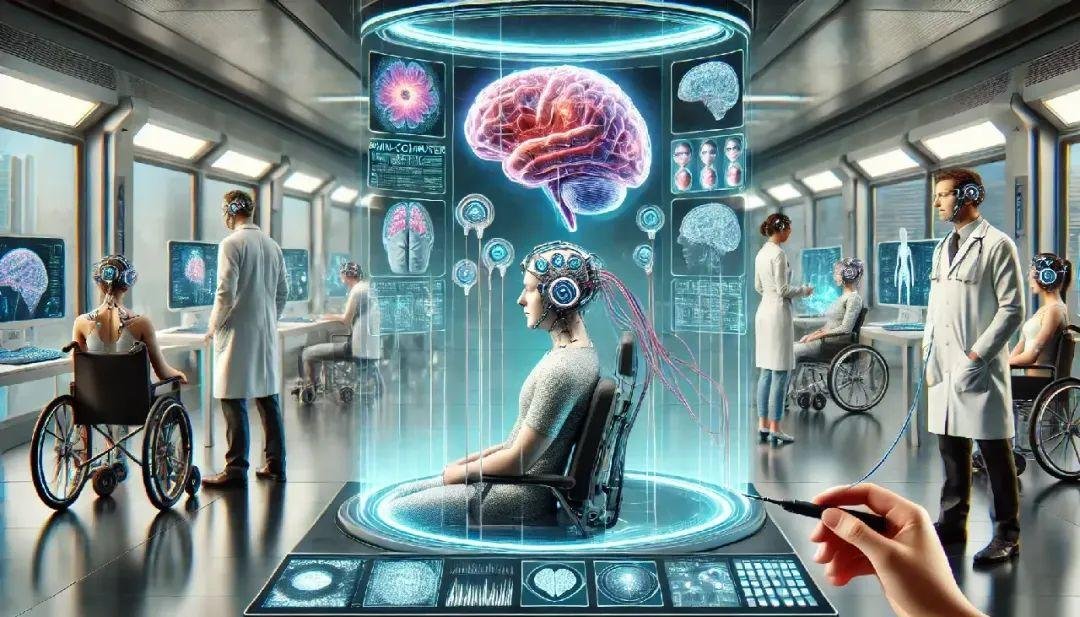
Brain-computer interfaces represent another revolutionary development. BCIs establish direct communication pathways between neural activity and digital devices by translating electrical brain signals into actionable commands. Individuals affected by paralysis, spinal cord injury, amyotrophic lateral sclerosis (ALS), or stroke may regain communication and environmental control through AI-enhanced BCI systems. As signal-processing algorithms become more sophisticated, BCIs are expected to provide faster, more accurate, and increasingly intuitive interactions between humans and technology.
Semiconductor innovation plays a foundational role in enabling these advances. Modern neurotechnology requires highly efficient processors capable of analysing enormous volumes of neural information with minimal latency and power consumption. Specialised AI accelerators, neuromorphic chips, edge processors, and low-power semiconductor architectures enable real-time signal processing within implantable and wearable medical devices. Unlike conventional computing platforms, neuromorphic processors mimic certain characteristics of biological neural networks, improving computational efficiency for complex neurological applications while reducing energy consumption.
Edge computing further enhances personalised brain healthcare by enabling data processing directly within medical devices instead of relying exclusively on cloud infrastructure. Implantable neurostimulators, wearable EEG headsets, and smart neurological monitoring systems can perform AI inference locally, reducing response times while strengthening patient privacy. This capability is particularly valuable for applications such as adaptive deep brain stimulation, seizure detection, and real-time neurorehabilitation, where rapid decision-making directly influences therapeutic effectiveness.
Artificial Intelligence is also transforming mental healthcare. Machine learning models can integrate speech characteristics, facial expressions, sleep patterns, smartphone interactions, wearable sensor data, and behavioural information to identify early indicators of depression, anxiety, cognitive decline, and other neurological or psychiatric conditions. Digital biomarkers derived from these analyses support clinicians by providing objective measurements that complement traditional clinical evaluations.
The emergence of closed-loop neuromodulation further demonstrates the power of AI-driven neurotechnology. Unlike conventional neurostimulation devices that deliver fixed electrical signals, closed-loop systems continuously monitor neural activity and automatically adjust therapy according to the patient's current physiological condition. AI enables these adaptive responses by recognising meaningful neural patterns and optimising stimulation parameters in real time. This personalised approach holds considerable promise for epilepsy, Parkinson's disease, chronic pain, treatment-resistant depression, and movement disorders.
Technology leaders such as NVIDIA, Intel, IBM, Medtronic, Neuralink, and Synaptics are investing heavily in semiconductor innovation, AI computing platforms, brain-computer interfaces, intelligent neurostimulation, and advanced biomedical engineering. Their research reflects growing recognition that future healthcare will increasingly depend upon intelligent computing integrated directly with human biology.
Despite remarkable technological progress, significant challenges remain. Neural information represents some of the most sensitive personal data that individuals can generate. Protecting brain data requires robust cybersecurity, encryption, identity management, ethical governance, informed consent, and transparent AI decision-making. As neurotechnology becomes more sophisticated, policymakers, healthcare providers, engineers, and researchers must collaborate to ensure responsible innovation that protects both patient privacy and human autonomy.
Another challenge involves equitable access. Advanced neurotechnology should not become available only to highly specialised medical centres or affluent populations. Expanding digital infrastructure, reducing semiconductor manufacturing costs, supporting clinical research, and training healthcare professionals will be essential for ensuring that personalised brain healthcare benefits society broadly rather than selectively.
Looking toward the future, neurotechnology will increasingly converge with quantum computing, digital twins, precision medicine, wearable biosensors, federated learning, and generative AI. Researchers envision digital brain twins capable of simulating neurological conditions before treatment begins, AI systems that personalise rehabilitation programs continuously, and implantable devices capable of predicting neurological events before symptoms occur. Such innovations may fundamentally redefine how neurological disorders are diagnosed, treated, and prevented.
Importantly, these technologies are designed to enhance—not replace—clinical expertise. Neurologists, neurosurgeons, psychiatrists, rehabilitation specialists, neuroscientists, and biomedical engineers will remain central to patient care. AI provides faster analysis and richer clinical insights, while human professionals contribute empathy, ethical judgment, contextual understanding, and individualised decision-making.
In conclusion, the convergence of neurotechnology, artificial intelligence, and advanced semiconductor computing represents one of the most transformative developments in modern medicine. Intelligent neural interfaces, adaptive medical devices, AI-assisted diagnostics, and energy-efficient computing platforms are enabling a future where brain healthcare becomes increasingly predictive, personalised, and proactive. As innovation continues to accelerate, personalised neuroscience will move beyond treating neurological disease toward optimising lifelong brain health. The future of brain healthcare will be shaped not only by medical discovery but also by intelligent computing systems capable of understanding the extraordinary complexity of the human mind.
#Neurotechnology #ArtificialIntelligence #BrainComputerInterface
#BrainHealth #PrecisionMedicine #NeuromorphicComputing #Semiconductors #AIHealthcare #DigitalHealth #Neuroscience
#SmartHealthcare #MedicalInnovation #HealthcareTechnology
#FutureOfHealthcare #BrainAI #ComputingInnovation #DrAkhileshKumar
Author: Dr. Akhilesh Kumar
References
- National Institutes of Health. BRAIN Initiative and Neurotechnology Research.
- World Health Organization. Brain Health and Digital Health Guidance.
- NVIDIA. AI Computing Platforms for Healthcare and Life Sciences.
- Intel. Neuromorphic Computing and Edge AI Research.
- IBM. AI, Quantum Computing, and Healthcare Innovation.
- Medtronic. Adaptive Deep Brain Stimulation and Intelligent Neuromodulation.
- Neuralink. Brain-Computer Interface Research and Neural Engineering.
- Institute of Electrical and Electronics Engineers. Publications on Neurotechnology, Artificial Intelligence, and Biomedical Engineering.
- International Federation for Medical and Biological Engineering. Research on Intelligent Medical Devices and Brain-Computer Interfaces.
Comments (0)
No comments yet. Be the first to share your thoughts!
Leave a Comment